Game Dev Articles
Sep 14, 2026 · 9 min read · DMG Forge
Unity Dev Tools Automation Opportunities: Where Your Pipeline Leaks Time
The Cost of Manual Workflows in Your Unity Toolchain Every manual step in your Unity pipeline is a tax you pay repeatedly, not once. Rebuilding asset bundles by hand, renaming build variants before a QA push, manually...
The Cost of Manual Workflows in Your Unity Toolchain
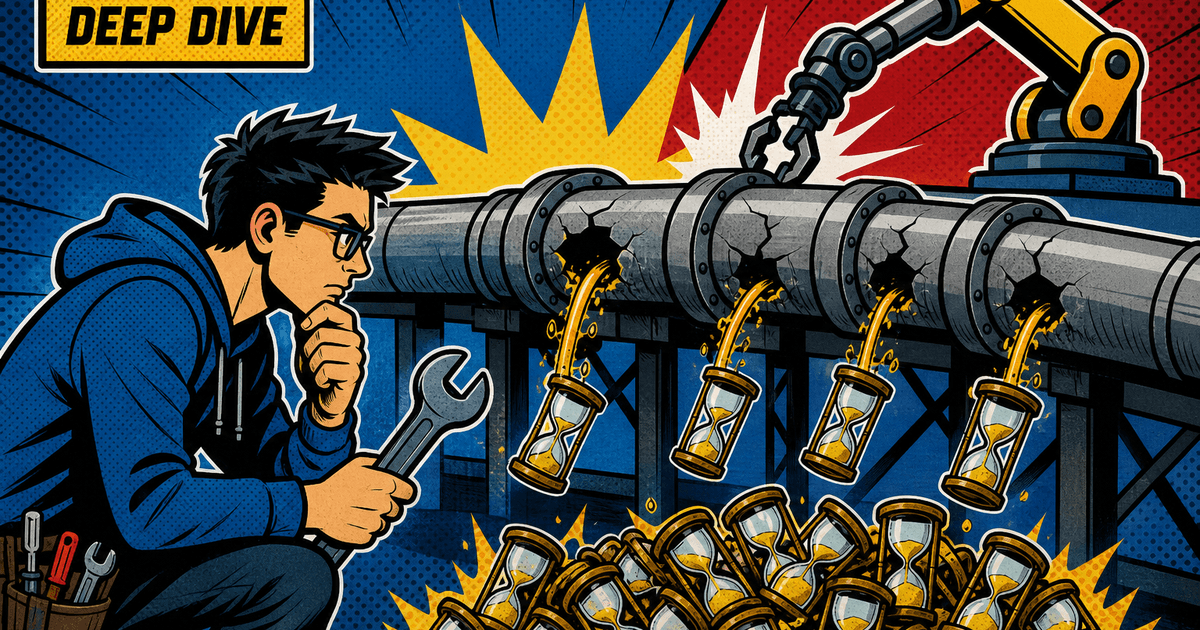
Every manual step in your Unity pipeline is a tax you pay repeatedly, not once. Rebuilding asset bundles by hand, renaming build variants before a QA push, manually bumping catalog versions - none of these tasks are hard, but they're recurring, and recurring manual work is where teams bleed hours they never get back.
Unity dev tools automation opportunities exist at almost every stage of a typical pipeline: asset processing, build configuration, Addressables management, CI integration, and import preprocessing. Most teams automate one or two of these and assume they've solved the problem. They haven't. The leaks compound silently, the same way technical debt does - a five-minute manual fix today becomes a half-day investigation next month when nobody remembers why the staging build has the wrong bundle version.
The pattern is predictable:
- A step gets skipped under deadline pressure.
- The skip causes a downstream failure (wrong asset reference, stale catalog, broken build tag).
- Someone burns an afternoon tracing the failure back to the skipped step.
- The team documents the fix instead of automating the fix.
That last point is the real failure mode. Documentation doesn't prevent human error - it just makes the error easier to diagnose after it's already cost you time. Automation prevents the error from happening at all.
The rest of this article breaks down the specific places in a Unity toolchain where automation pays off fastest, and how to prioritize them so you're not automating the wrong things first.
Asset Pipeline Automation: Stop Rebuilding Bundles by Hand
If you're still triggering asset bundle builds manually before every playtest or submission, you're accumulating technical debt whether you notice it or not. Manual bundle builds fail in three predictable ways: stale references, missed platform targets, and inconsistent compression settings between builds.
Automate this with BuildPipeline.BuildAssetBundles wrapped in an editor script that runs on a defined trigger - a menu item is a start, but a pre-build hook or file-watcher is better. The goal is removing the human decision of "should I rebuild bundles now?" entirely.
Concrete steps:
- Write a build script that calls
BuildAssetBundleswith explicitBuildAssetBundleOptions(don't rely on defaults -ChunkBasedCompressionversusUncompressedAssetBundlehas real load-time implications). - Hash-check source assets before triggering a rebuild so you're not wasting cycles rebuilding unchanged bundles.
- Version-stamp output using a manifest file so downstream systems know which bundle set is current.
- Fail loudly - if a bundle build throws a warning about missing dependencies, that should break the build, not get logged and ignored.
Teams that skip step 4 are the same teams debugging a missing texture reference in production three weeks later. A build that fails fast is cheaper than a build that succeeds silently with broken content.
Build Variant Automation: Eliminate Naming Errors and Configuration Drift
Manual build variant management is one of the most common places Unity teams lose time without realizing it. Someone forgets to flip Scripting Backend from Mono to IL2CPP before a release build. Someone tags a build v1.2.3-staging when it should be v1.2.4-staging. Someone ships a build with the wrong Managed Stripping Level and wonders why reflection-based code broke in production.
None of these are competence failures. They're process failures - humans executing repetitive configuration steps will eventually make a mistake, full stop.
Automate variant generation with a build matrix defined in code, not in a person's head:
- Define each variant (platform, scripting backend, stripping level, define symbols) as a data structure - a
ScriptableObjector JSON config works fine. - Drive
BuildPlayerOptionsprogrammatically from that structure so Player Settings are set identically every time for a given variant. - Auto-generate build names from the config (platform + version + timestamp + git hash) so you never rely on someone typing a filename correctly.
- Store the build matrix in version control so configuration drift between environments becomes a diffable, reviewable change instead of a Slack message nobody remembers.
The payoff here isn't just saved time - it's eliminated categories of bugs. A build that was never manually configured can't have a manual configuration error.
Addressables Automation: Catalog Generation and Content Updates Without Intervention
Addressables gives you a content catalog that decouples asset references from build-time bundle locations, which is exactly the kind of system that should never be touched by hand. If you're manually running "Build Addressables Content" before every content update, you're using a system designed for automation as if it were a manual export tool.
The Addressables Build Scripting API exposes everything you need to script this:
AddressableAssetSettings.BuildPlayerContent()handles catalog and bundle generation programmatically.- Content update builds (via
ContentUpdateScript) can be triggered against a previous build's state file automatically, rather than someone hunting down the rightaddressables_content_state.bin. - Remote catalog hosting paths and load paths should be set via build-profile-driven config, not hardcoded strings someone edits per environment.
Practical automation targets:
- Catalog versioning - auto-increment the catalog version on every content build and tag it against your source control commit.
- Content state file management - archive
addressables_content_state.binper release automatically so content updates always diff against the correct baseline. - Remote upload - script the upload of built bundles to your CDN or remote host as part of the build step, not as a separate manual upload someone forgets.
Skipping catalog automation is one of the most expensive mistakes on this list, because catalog mismatches don't fail at build time - they fail at runtime, in players' hands, when a stale catalog points to a bundle that no longer exists.
CI/CD Integration: Moving Builds Off Your Local Machine
If your build process still depends on a specific person's machine having the right Unity version, the right SDKs, and the right local cache state, you don't have a pipeline - you have a single point of failure with a keyboard attached.
Unity Cloud Build, self-hosted Jenkins, or GitHub Actions with game-ci/unity-builder all solve the same core problem: builds become reproducible, triggerable by anyone, and independent of any one developer's local environment.
Minimum viable CI setup for a Unity project:
- License activation handled headlessly - script activation via
-batchmode -serialor use a floating license server so builds don't stall on manual license prompts. - Build triggers tied to branch policy - merges to
developtrigger internal builds, merges torelease/*trigger candidate builds, tags trigger submission builds. - Artifact storage - every CI build produces a versioned, retrievable artifact, so "which build did QA test" is never a guessing game.
- Cache persistence - Library folder and Addressables cache should persist between CI runs, or you'll pay Unity's full reimport cost on every single build.
That last point matters more than teams expect. A ten-minute cache clear today prevents a four-hour session next sprint when a CI job that reimports the entire project from scratch times out during a crunch week. Configure caching correctly once, and every subsequent build gets faster instead of starting from zero.
Scripting Imports and Preprocessing: Automating the Setup Tax
Every new artist, animator, or environment file that enters your project pays a setup tax: import settings, naming conventions, folder placement, compression presets. If a human applies that tax manually, it gets applied inconsistently.
Unity's AssetPostprocessor API exists specifically to eliminate this. Use it aggressively:
OnPreprocessTexture()- enforce compression format, max size, and Texture Type based on folder path or naming convention, so nobody has to remember that UI textures live at a different compression setting than environment textures.OnPreprocessModel()- standardize import scale, normal calculation, and animation compression across every model that enters the project, regardless of who authored it or in what DCC tool.OnPreprocessAudio()- enforce load type and compression format based on clip length or folder convention (short SFX get Decompress on Load, long music tracks get Streaming).
Write these as project-wide editor scripts checked into version control, not personal preferences living in one developer's local settings. The rule of thumb: if an import setting matters for performance or consistency, it should be enforced by code, not by a wiki page someone reads once during onboarding and never again.
This is also where automation pays off fastest for growing teams - every new hire benefits immediately, without needing a manual walkthrough of "here's how we set up textures around here."
Measuring Automation ROI: Which Opportunities Return Time First
Not every automation opportunity deserves equal priority. Rank them by frequency times friction, not by technical interest.
A rough prioritization framework:
- High frequency, high friction - asset bundle rebuilds and Addressables catalog builds. These happen constantly and fail expensively when done wrong. Automate these first.
- Medium frequency, high friction - build variant generation and CI integration. These happen per-release rather than per-commit, but a single mistake here (wrong scripting backend, missing artifact) costs a full release cycle.
- High frequency, low friction - import preprocessing. Individually cheap, but the compounding cost across a growing team and asset library makes this worth automating early, even though no single instance of it feels urgent.
Calculate ROI honestly: if a manual task takes 10 minutes and happens twice a week, that's roughly 17 hours a year - not dramatic on its own. But most teams have five or six of these running in parallel, and the failures compound faster than the time savings do. The real cost isn't the manual execution time; it's the debugging sessions caused by inconsistent manual execution.
Start with whichever pipeline stage has caused the most recent production incident. That's not a coincidence - it's a signal about where your process is weakest, and where automation will return time immediately instead of theoretically.
Related Reading
Article complete
XP lands automatically when you reach the end.
Rate this article
Comments
Comments are held for moderation before appearing publicly.