Game Dev Articles
Oct 14, 2026 · 8 min read · DMG Forge
Unity Dev Tools Outsourcing vs In-House: When to Build, When to Buy, When to Hire
The Real Cost of Building Unity Dev Tools In-House Every studio thinks they can build their own asset pipeline, custom inspector, or build automation system faster than it actually takes. They can't. The unity dev too...
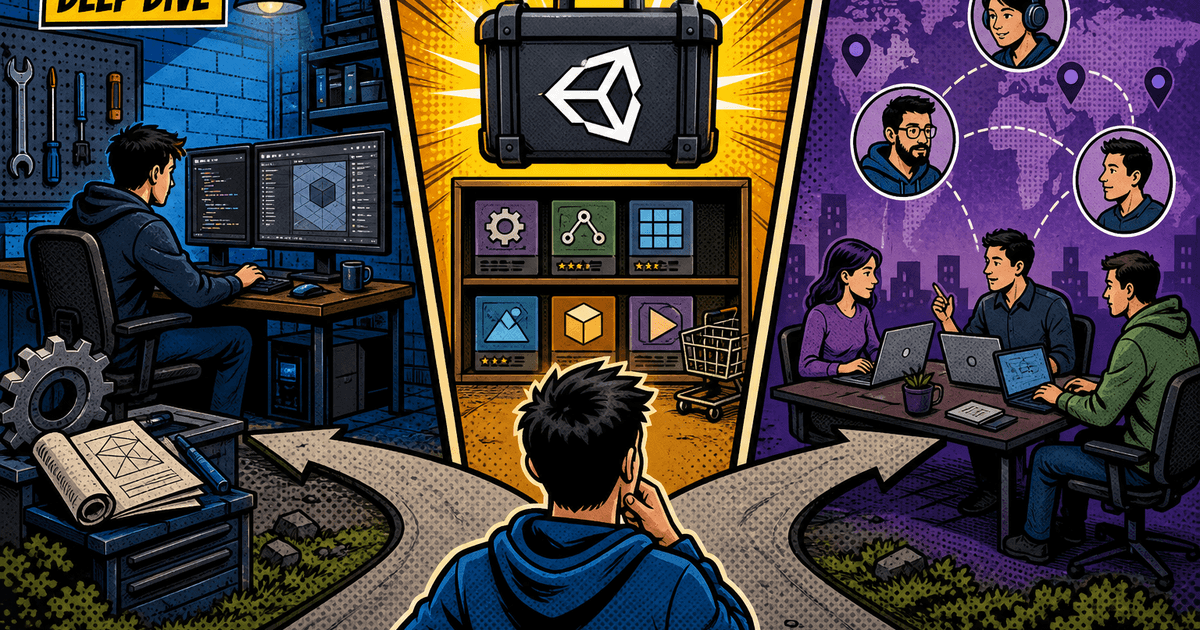
The Real Cost of Building Unity Dev Tools In-House
Every studio thinks they can build their own asset pipeline, custom inspector, or build automation system faster than it actually takes. They can't. The unity dev tools outsourcing vs in-house decision usually gets made on gut feeling instead of real numbers, and that's where budgets die.
Here's what in-house tool development actually costs, beyond the engineer salaries you already budgeted for:
- Opportunity cost: Every week your senior engineer spends writing a custom level editor is a week they're not shipping gameplay features.
- Iteration tax: First versions of internal tools are almost always wrong. You'll rebuild the UI, the data model, or the serialization layer at least once.
- Documentation debt: Internal tools rarely get documented until someone leaves and the team realizes nobody else understands the build pipeline.
- Platform churn: Unity ships breaking changes across major versions. Your custom tooling has to be maintained against every one of them, indefinitely.
Studios that skip this math end up with a "temporary" internal tool running three years later, held together by one engineer's institutional memory. That's not a tool - that's a liability with a UI.
Outsourcing Unity Dev Tools: What You're Actually Paying For
When you outsource, you're not paying for code. You're paying for someone else to have already made the mistakes.
A vendor who's built ten Addressables pipelines across ten different client projects has already hit the edge cases you haven't discovered yet - catalog versioning conflicts, remote content update failures, platform-specific bundle size blowups. You're buying that scar tissue instead of growing your own.
Concretely, outsourcing Unity dev tools typically buys you:
- Faster time to a working v1 - vendors reuse internal frameworks and boilerplate they've already validated.
- Specialized knowledge - editor scripting, shader tooling, and build pipeline automation are narrow skill sets that generalist engineers often lack.
- Predictable cost structure - fixed-scope contracts give you a number up front instead of an open-ended internal timeline.
- Reduced bus-factor risk - a vendor team spreads knowledge across multiple people instead of concentrating it in one engineer.
The tradeoff is control. You don't own the institutional knowledge of how the tool was built, and you're dependent on the vendor's documentation and support responsiveness after handoff. If the contract ends and the vendor disappears, you inherit a codebase you didn't write.
Ownership and Maintenance: The Debt That Never Stops Compounding
This is the part both sides of the debate underweight. Building or buying a tool is a single transaction. Maintaining it is a permanent subscription, whether or not anyone's paying attention to the invoice.
Unity dev tools accumulate technical debt the same way any codebase does, but faster, because they sit underneath everything else your team builds. A broken custom importer doesn't just fail quietly - it blocks every artist on the team until someone fixes it.
Maintenance debt compounds through:
- Unity version upgrades that silently break editor scripting APIs or Addressables group configurations.
- Platform SDK updates that change build requirements out from under your tooling.
- Team turnover, where the one person who understood the custom shader graph nodes leaves without a handoff.
- Scope creep, where a tool built for one project gets reused on three others without a refactor to match.
If you're still maintaining a home-grown asset bundle pipeline instead of Addressables, you're paying this debt daily and probably don't realize it. A ten-minute version check today prevents a four-hour debugging session during crunch.
Outsourced tools don't escape this reality - they just shift who's responsible. A good vendor contract includes a maintenance window or a support retainer. A bad one hands you a tool and disappears the moment the invoice clears.
Team Velocity: In-House Expertise vs. Time to Market
In-house teams get faster over time. That's the core argument for building internally, and it's a legitimate one - but only if the team sticks around long enough to compound that expertise.
An engineer who's built your build pipeline, your custom inspector framework, and your asset validation tools understands how they interact in ways no outside vendor ever will. That compounding knowledge pays off on your second and third projects, not your first.
Outsourcing wins on raw time to market. A vendor with existing frameworks can deliver a working tool in weeks instead of the months it takes an internal team to design, prototype, and iterate from zero. If you're under deadline pressure for a specific feature - a custom level editor for a milestone build, a localization pipeline for a launch window - outsourcing closes that gap faster than hiring and ramping someone internally.
The real question isn't which option is faster in isolation. It's whether your project has a long enough runway to make internal expertise pay off, or whether you need the tool working next month regardless of who understands it long-term.
When to Keep Unity Dev Tools In-House (And When You'll Regret It)
Keep it in-house when the tool is core to your competitive advantage. If your studio's entire pitch is procedural generation, your procedural tooling isn't a utility - it's the product. Outsourcing your core differentiator means handing your competitive edge to a vendor who can build the same thing for your competitor next quarter.
Keep it in-house when:
- The tool touches proprietary game logic that can't be abstracted into a generic deliverable.
- You have an engineer who already owns the domain and has bandwidth to maintain it long-term.
- The tool needs tight, ongoing iteration with design and art teams who sit in the same building.
You'll regret keeping it in-house when:
- The tool is a solved problem - build automation, CI/CD pipelines, Addressables setup - and you're reinventing commodity infrastructure.
- Your team lacks the specific expertise (shader tooling, native plugin development) and is learning on the job at the project's expense.
- Deadline pressure means a six-week internal build timeline isn't acceptable, but a vendor can deliver in two.
The honest test: if a vendor could build the same tool and you'd happily use it without caring who wrote it, you're paying an in-house premium for ego, not strategy.
Hybrid Approaches: Outsourcing Specific Tools While Maintaining Control
Most studios don't need a binary answer. The pragmatic approach is to outsource commodity tooling and keep differentiating tooling in-house, with a clear contract boundary between the two.
Practical hybrid patterns that work:
- Outsource the build pipeline, own the gameplay tools. CI/CD, build automation, and platform packaging are solved problems a vendor can set up once and hand off with documentation.
- Outsource initial scaffolding, bring maintenance in-house. Have a vendor build v1 of a custom editor tool, then assign an internal engineer to own it going forward. You pay for speed up front and avoid long-term dependency.
- Keep core systems internal, outsource peripheral tooling. Your save system and gameplay framework stay in-house; your level export tools or asset validation scripts get built by a vendor.
The condition that makes hybrid work is a documented handoff. If a vendor builds something your team will maintain, the contract needs to specify source code ownership, inline documentation standards, and a knowledge transfer session - not just a zip file and an invoice. Skip this step and you've just outsourced the creation of technical debt instead of avoiding it.
Making the Decision: A Framework for Your Project
Stop debating this in the abstract. Run every tooling decision through four questions:
- Is this tool core to our competitive differentiation? If yes, lean in-house. If no, it's a candidate for outsourcing.
- Do we have the internal expertise to build this well on the first attempt? If not, outsourcing buys you someone else's already-paid-for mistakes.
- What's our actual timeline? If you need this working in six weeks and internal ramp-up takes three months, the decision makes itself.
- Who maintains this in twelve months? If the answer is "we'll figure it out," you're setting up the exact debt spiral this article warned about. Decide before you build or buy, not after.
The unity dev tools outsourcing vs in-house question isn't a one-time strategic choice - it's a recurring decision you'll make on every project, often for every individual tool within that project. Treat it that way. The studios that get burned are the ones who picked a default answer once and stopped asking the question.
Related Reading
Article complete
XP lands automatically when you reach the end.
Rate this article
Comments
Comments are held for moderation before appearing publicly.